

Read any electric car review – we have plenty on our sister Motoring Research website – and you will see measurements quoted using both kW and kWh. So, what do these values mean and why are they important?
Firstly, you need to know that kW stands for kilowatts, while kWh is short for kilowatt-hours. Crucially, the two units are not compatible, so they cannot be compared. Confused? Bear with us…
Imagine an electric car battery is a swimming pool: kWh is the amount of water the pool can hold, while kW is the rate at which water will flow into the pool. Sure, water and electricity don’t mix, but hopefully the analogy still works.
What is kW?
As the video above explains, kW is a measure of power. One kilowatt is simply 1,000 watts. Kilowatts (kW) are the measurement of energy used for electric car chargers. Typical outputs for these are 7kW, 22kW, 50kW, 350kW and so on.
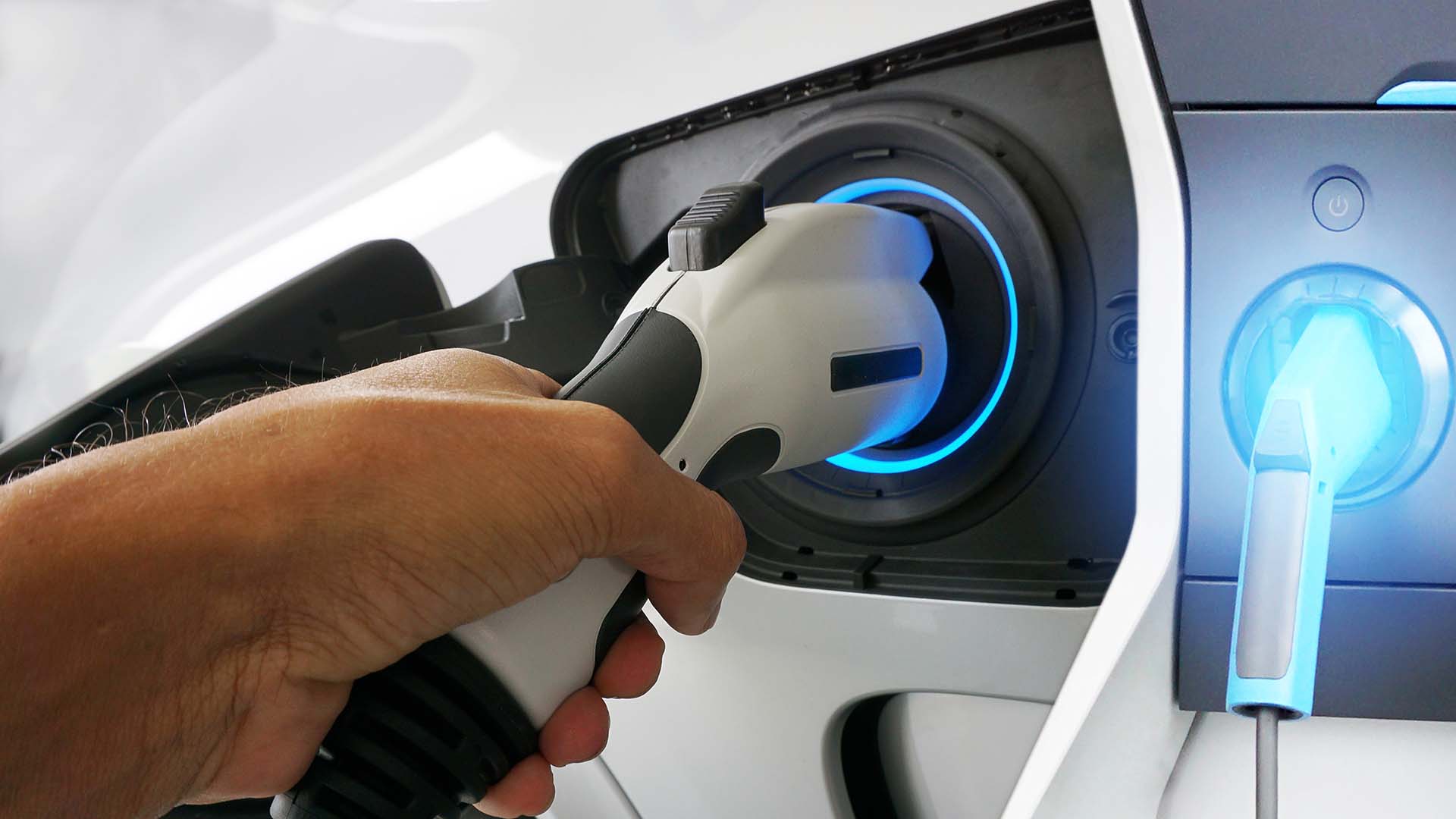
In other words, it’s the rate at which power is transferred from a charging station into your EV. In theory, then, it makes sense to use a rapid charger, because a 100kW input will to replenish a battery more quickly than a 22kW one.
However, that might not be the case, because not all electric cars can handle a rapid charge. It’s also worth noting that EV batteries do not respond well to regular rapid charging, which can cause them to degrade more quickly over time.
At present, only the most powerful EVs, such as the Audi RS E-Tron GT Performance can charge at anything close to 350kW.
In addition, kW can be used as a reference for the output of the electric motor. In a petrol or diesel car, this would probably be measured in horsepower (hp) or brake horsepower (bhp).
We admit, it’s confusing to have two definitions for kW. But put it this way: when kW is used in the context of a charger, it’s the rate at which you can charge your battery. When it’s used in the context of a car, it’s the size of the electric motor.
What is kWh?

Meanwhile, kWh is the total amount of energy stored in a battery. For example, there are two versions of the Renault 5 E-Tech available: 40kWh and 52kWh. In general, the larger the battery, the further you can travel on a single charge.
Here are examples of various battery sizes, along with their associated range:
- Renault 5 E-Tech 40kWh: 190 miles
- Vauxhall Corsa-e 50kWh: 211 miles
- Nissan Leaf 59kWh: 239 miles
- Kia EV3 81kWh: 375 miles
- Rolls-Royce Spectre: 103kWh: 329 miles
- Mercedes-Benz EQS 108.4kWh: 453 miles
To put it another way, a kWh is the amount of energy expended in one hour by a kilowatt of power. You will likely be familiar with the measurement, because it’s used by energy providers when billing you for your domestic electricity.
Still not getting it? Well, imagine an electric car with a 80kW electric motor and an 80kWh battery. If you ran the motor continuously at maximum speed, you would drain the battery in exactly one hour.
In summary, kW is either the rate at which your battery will recharge or the size of the electric motor, while kWh is the capacity of the battery. Got that? Good.
ALSO READ:
Charging an electric car: what you need to know
How can regenerative braking improve your electric car’s range?

[…] by Porsche found that 75 percent of charging for its electric vehicles takes place at home. Making domestic life easier for Porsche owners has thus been an important area of […]
[…] new Leapmotor B10 has a 67.1kWh battery, providing a fully charged range of 270 […]
[…] Electric and 1,156hp Cayenne Turbo Electric. Both use a 113kWh battery and offer blisteringly fast charging speeds of up to […]