

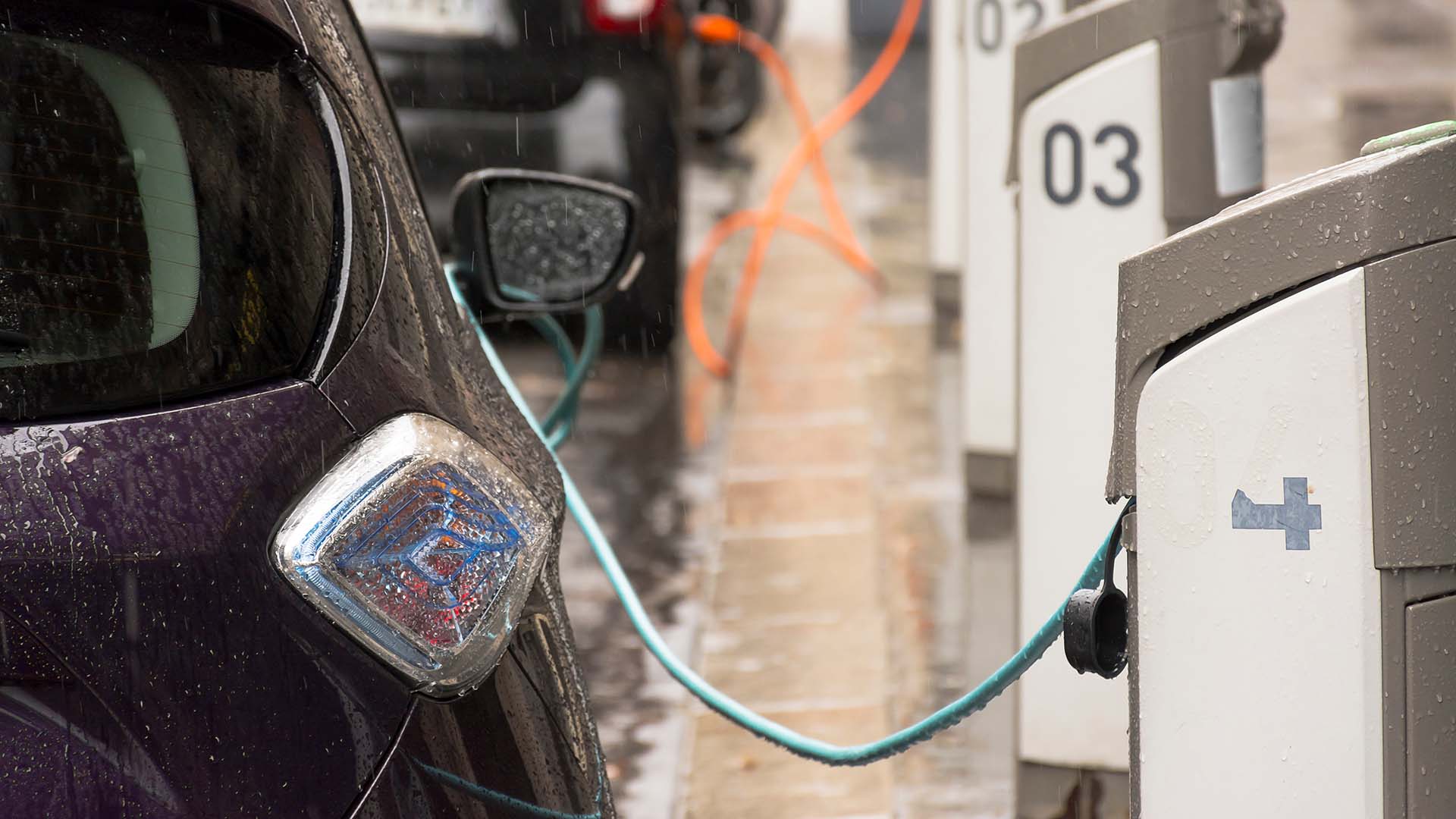
Will thousands of electric car drivers be left stranded when autumn arrives and the weather gets wetter? Of course not, but it seems not everyone knows that. Just over five years ago, a survey discovered that 12 percent of British motorists believe an EV can’t be driven in the rain.
Today, as EVs become ever more mainstream – helped by the government’s recent Electric Car Grant – we’re certain that figure is much lower. Because you definitely CAN drive an electric vehicle in the rain, heavy or otherwise. As pointed out by the charity Electrical Safety First: ‘engineers have ensured that the cars are waterproof’.
The charity continued: ‘The charging stations are also waterproof, so you will be able to charge in the rain. If in doubt, check with the manufacturer.’
Common sense is required, of course. You wouldn’t leave your windows or sunroof open in a conventional car, so don’t do it in an electric vehicle. Rainwater can damage interior fixtures, dials and switches.
An investigation by ESF into the charging habits of electric car drivers revealed some rather worrying results, however. Around three-quarters had used domestic multi-socket extension leads to charge from the mains in their home – despite these being unsuitable for outdoor use.
What’s more, more than half of the 1,500 respondents who charged using an extension lead had left cables running to their vehicle when it was raining. This puts the owner at risk of an electric shock. The practice could also overload the domestic supply, causing a power cut or even a fire.
Driving an EV on flooded roads
When it comes to driving on a flooded road, the usual rules apply. That is to say, you should never drive through a flood. Turn around and find another route. The Environment Agency warns that just 300mm of flowing water is enough to float your car.
Not that this will give Tesla chief Elon Musk too many sleepless nights. The controversial billionaire posted on his X platform: “We *def* don’t recommend this, but Model S floats well enough to turn it into a boat for short periods of time. Thrust via wheel rotation.”
When asked whether or not the electrics are waterproof, Musk said: “Drive units and battery are sealed”.
There’s some evidence to suggest an electric car will perform better than a conventional vehicle when wading through water. For example, the Jaguar I-Pace has a wading depth of 500mm and features safety systems designed to deal with a flood situation.
A spokesperson for Jaguar told the Express newspaper: “Precautions should be taken when driving through standing water in any car. However, EVs do not have an air intake, meaning the propulsion system is not affected by being immersed in water like an engine.”
For once, then, it seems electricity and water can mix.
ALSO READ:
How to drive safely in heavy rain
What is electric car preconditioning and why does it matter?