

At some point, the batteries that power an electric car may need to be replaced. However, if you’ve just bought a new EV, this really isn’t something to worry about.
All batteries lose capacity over time, including those in EVs. It could be as little as two percent per year, but the rate of decline depends partly on how you drive and charge the car.
In this article, we look at some of the points to consider when it comes to EV battery life – and how you can make your battery last longer.
EV battery warranties
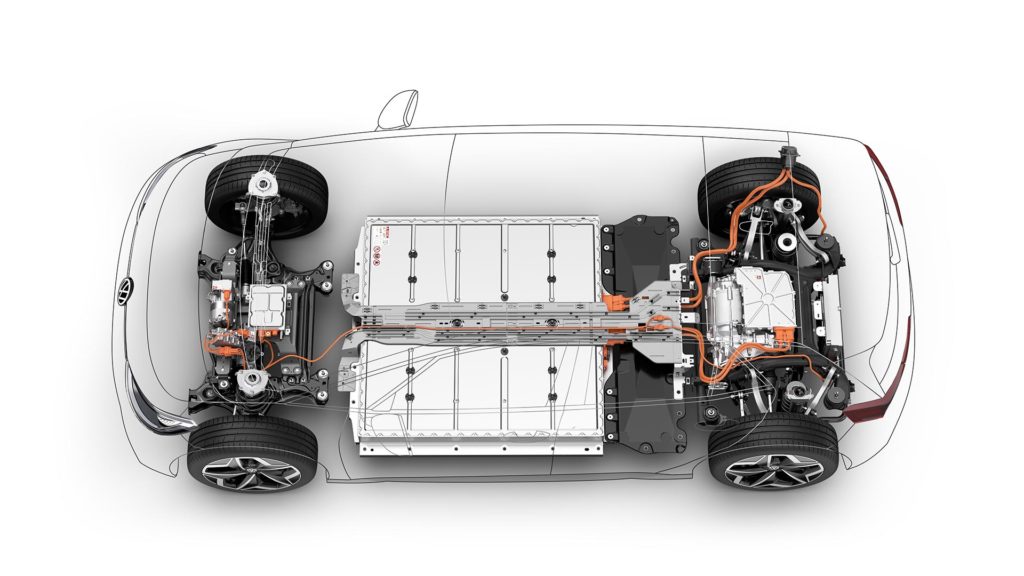
Let’s start by looking at manufacturer warranties. For example, the battery in a Tesla Model S or Model X is warrantied for eight years or 150,000 miles, whichever comes first. The company guarantees a minimum 70 percent retention of capacity over the warranty period.
You get the same eight-year and 70 percent warranty in the smaller Tesla Model 3 and Model Y, but the mileage restriction is 100,000 for standard Rear-Wheel Drive models, or 120,000 miles in the Long Range and Performance variants.
The batteries in many popular EVs, including the Renault 5 E-Tech, Vauxhall Corsa-e and Peugeot e-208 are covered for eight years or 100,000 miles. The warranty for the Nissan Leaf ranges from five years/60,000 miles to eight years/100,000 miles, depending on the model.
When estimating battery life, these warranties are a good place to start. If a manufacturer is prepared to warrant an EV battery for 100,000 miles, that should see most drivers covered for around a decade.
How does an EV battery degrade?

A number of things determine the rate at which a battery will lose capacity. For a start, the simple act of recharging and discharging your electric car will eat away at battery life, albeit at a slow and barely noticeable rate.
Some other factors will take larger bites out of battery capacity. These include:
- Use at high temperatures
- Recharging the battery from flat
- Consistent use of rapid chargers
- Overcharging the battery
- High discharging (i.e. fast acceleration and high speeds)
To preserve the life of your car’s battery, try to keep its charge level between 50 percent and 80 percent, using an overnight top-up when possible.
Maintaining EV battery life
American website Electrek used fleet car data to analyse EV battery health. The findings of its research can be summarised as follows:
- Most electric car batteries will outlast the life of the vehicle
- The average decline in energy storage is 2.3 percent a year
- The biggest losses occur in the first few years, then the rate of decline slows
- The use of rapid chargers speeds up the process of degradation
- Liquid-cooled batteries perform better. For example, the Tesla Model S (liquid cooling) declines at a rate of 2.3 percent a year. Meanwhile, the old Nissan Leaf (air cooling) drops by 4.2 percent a year
- Higher vehicle use does not necessarily equate to higher battery degradation
In reality, the life of the battery shouldn’t be a major concern unless you are buying an older, second-hand electric car.
Driven sensibly and charged sympathetically, there’s no reason why a battery pack won’t see you – and indeed the car’s next owner – through to a six-figure mileage and beyond.
In other words, the battery in an EV could last as long as the petrol or diesel engine in a conventional car. And how many of us really worry about potentially replacing an engine when we buy a car?
ALSO READ:
What is electric car preconditioning and why should I use it?