

It is tempting to fully charge the battery in your electric car when possible. After all, you like to leave the house with the battery in your smartphone charged to 100 percent, right?
However, while the occasional full charge isn’t a problem, you should avoid charging an electric car to 100 percent on a regular basis. Doing so will reduce the battery’s longevity and, over time, put a dent in the car’s potential driving range.
Avoiding full fill-ups also means you will save time at public charging points, so your journeys could be quicker.
Why an 80 percent EV charge is best
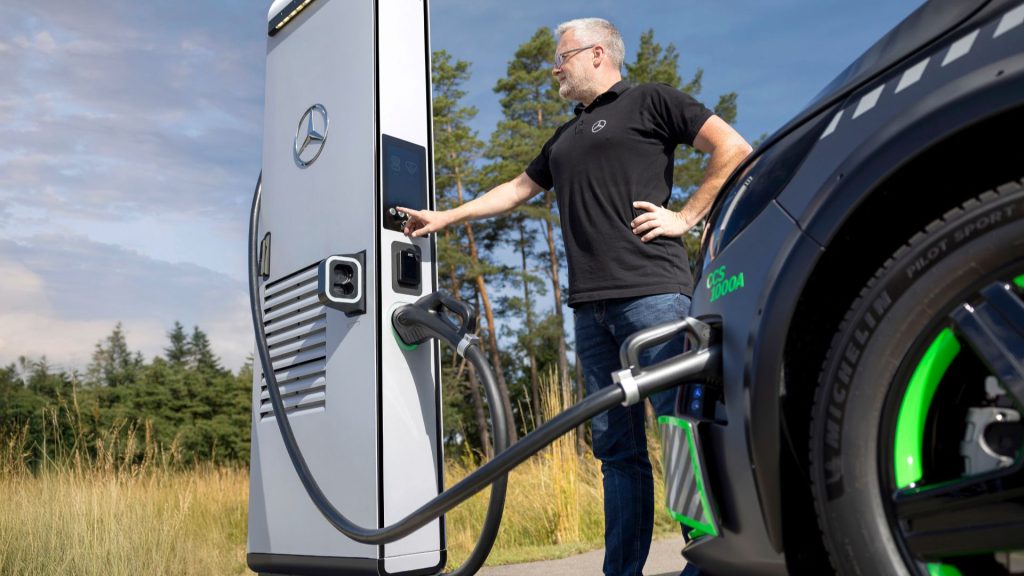
The lithium-ion batteries that power the vast majority of electric cars are most efficient at charge levels of between 20 and 80 percent. It’s why a lot of car manufacturers quote charging times to 80 percent, and why many home and public chargers provide the option to stop charging when the battery reaches a desired level.
Don’t take our word for it. Hyundai, which currently offers the Inster, Ioniq 5, Ioniq 6 and Kona Electric EVs, says: ‘It is recommended to stop charging at 80 percent. While this reduces range, it can increase battery lifespan. Another advantage is that it leaves room for regenerative braking, which is often turned off at full charge to avoid overcharging the batteries.’
This is a view echoed by Tesla supremo, Elon Musk. In response to a question about charging to full capacity, said: “At 100 percent stage of charge, regen braking doesn’t work, because the battery is full, so [the] car is less energy efficient.”

This means fully charging the battery could actually reduce the car’s range as regenerative braking isn’t turning braking energy into electricity.
Ford, which offers the Puma Gen-E, Explorer, Capri and Mustang Mach-E electric cars, says: “For most Ford electric vehicles, the recommended charge level is 90 percent. Avoid charging to 100 percent when you don’t need that range, although 100 percent charge is recommended for longer trips.”
Additionally, research carried out by an electric vehicle battery warranty provider found that charging the battery once it hits 10 percent and recharging to 80 percent is the key to preserving battery life.
Is a flat EV battery just as bad?
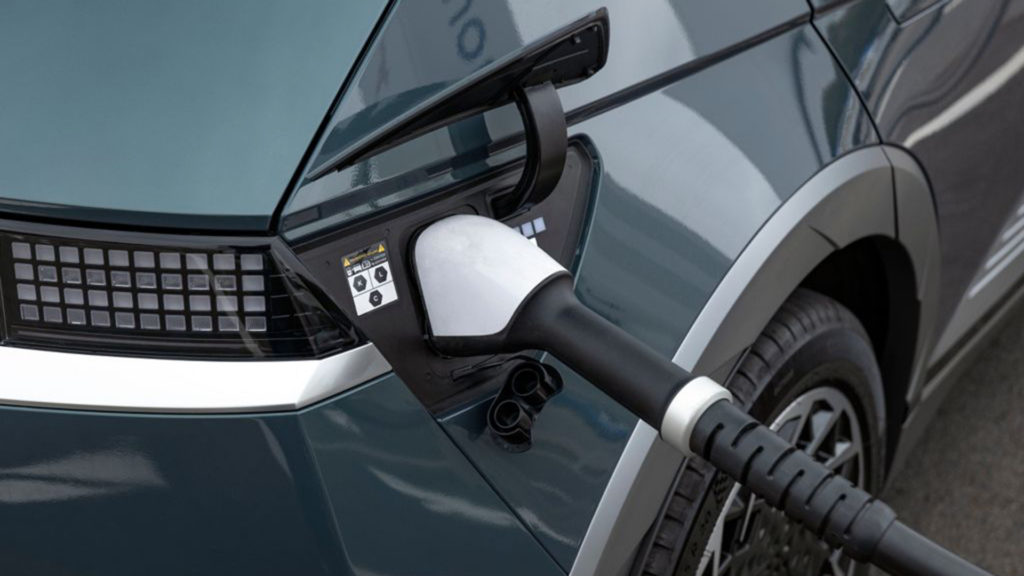
In short, yes. Fortunately, an electric car’s battery management system should include a ‘buffer’ to avoid it being completely discharged to empty.
However, the level could drop to zero if the car isn’t used for a prolonged period – if you left it parked for a couple of weeks while on holiday, for example.
Running from 100 percent to zero is seriously bad for a battery’s health and should be avoided. Both the discharge and subsequent recharge put a large strain on the battery, making it work harder and reducing its lifespan.
Avoiding a full charge will save time
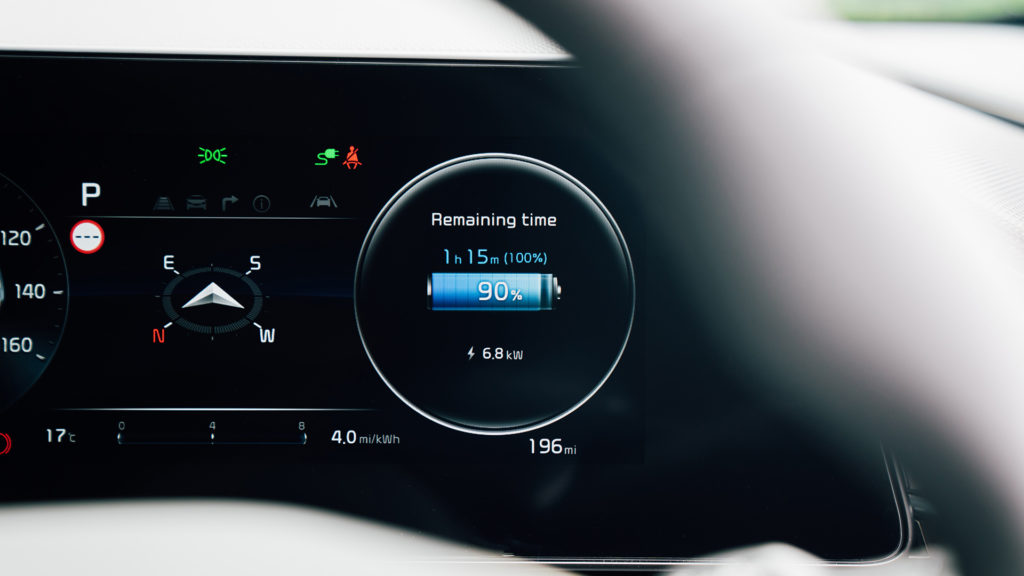
It’s obvious: charging to 80 percent rather than 100 percent will save you time at an electric charging point. Stopping at 80 percent means you miss out on a few miles of range, but charging at home via a 7.4kW or 22kW wallbox will be better for the battery’s health.
Regular use of rapid and ultra-rapid chargers will also reduce the battery’s lifespan. It’s a case of ‘slow and steady wins the race’.
Kia says eight years of standard charging will give you 10 percent more battery life compared to eight years of using fast chargers.
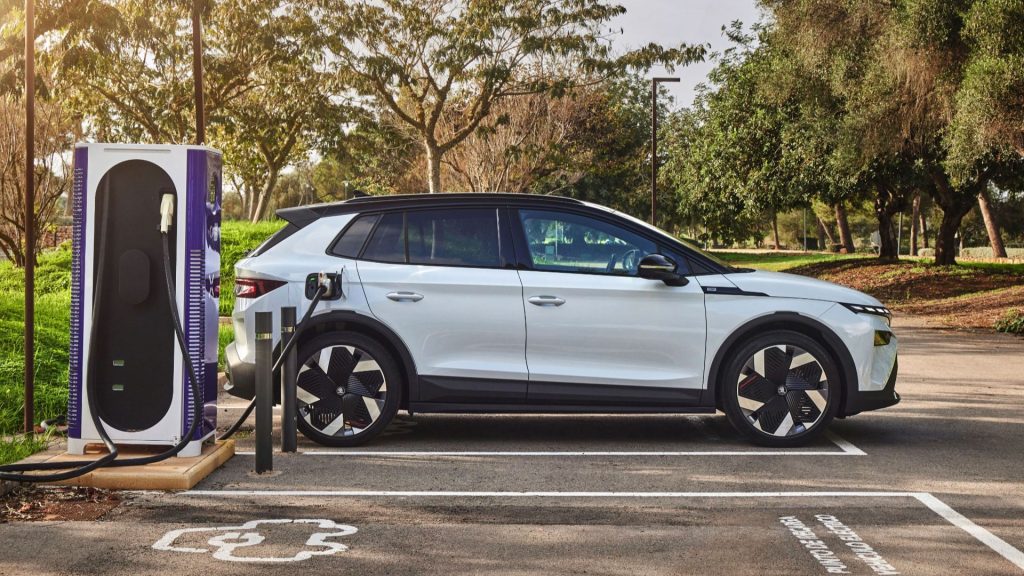
The other thing to consider is that the rate of charge from a rapid charger will tail off once it hits 80 percent. This is to protect the car’s battery. By the time it nears being full, the rate could be around 3kW – the same as a domestic plug socket.
Oh, and waiting for a battery to hit 100 percent while there’s a queue of people waiting to use the charger just isn’t cricket. It’s like doing a week’s grocery shopping while leaving your car parked at a petrol pump.
How to charge your EV

We’re not saying you should never fully charge your electric car. If you’ve got a long journey ahead of you or you know you won’t have access to a charger at your destination, go ahead and treat yourself to 100 percent juice.
Worrying about battery health will be the least of your problems if you’re left stranded at the roadside without any charge.
However, staying between 20 percent and 80 percent is the key if you want to preserve your car’s electric range and keep the battery in tip-top condition for longer.
ALSO READ:
How does regenerative braking boost your electric car’s range?
Will servicing and maintenance be cheaper on an electric car?

[…] the 8,300 electric cars tested, the average battery health was 93 percent. What’s more, the vast majority of battery health statuses were above 80 […]
[…] Sapinska used a combination of video footage, odometer readings, GPS readings and battery level data to monitor the record […]
[…] the range of every version of both the Model 3 and Model Y. The improvement is thanks to upgraded battery packs with higher-density cells that deliver more […]
[…] Hydrohertz has developed the new ‘Dectravalve’. The innovation is designed to regulate EV battery temperature, keeping the cells […]